Bubbles — signal by topic
size = articles (7d) · editorials by Cayce67 articles in mining — bigger & brighter = stronger signal
1 in 5,084 chance A solo Bitcoin miner just hit a 3.125 BTC block.
A solo Bitcoin miner achieved a remarkable feat by successfully mining a block and earning a substantial reward of 3.125 BTC. This rare occurrence defied significant odds, specifically a 1 in 5,084 chance, underscoring the lottery-like nature of solo mining. While the majority of individual miners contribute their computational power to mining pools for more consistent, albeit smaller, payouts, this event showcases the unique possibility for a single participant to secure an entire block reward. The 3.125 BTC reward includes the current block subsidy (post-halving) plus any associated transaction fees within that block. This achievement is a clear testament to the decentralized architecture of the Bitcoin network, where even small-scale, independent operations retain a theoretical chance to contribute to network security and potentially receive a significant financial windfall. Such occurrences are often celebrated within the Bitcoin community as they exemplify the potential for individual participation and unexpected success in a truly permissionless system.
Finally, my solar panels are generating some sweet sats
MARA transfers $81.1 million in bitcoin to Galaxy Digital as strategy pivots to AI
30dBassin (ckpool solo mining app) gets Umbrel's Bitcoin app look, now in testing

Satoshi-Era Bitcoin Worth $8.3 Million Moves After 16 Years
A block of 100.02 Bitcoin, originating from mining activity in July 2010, was recently transferred after remaining untouched for 16 years. The current value of these coins is estimated at $8.3 million. The transaction provides no identifiable information regarding the current owner of these Satoshi-era funds.
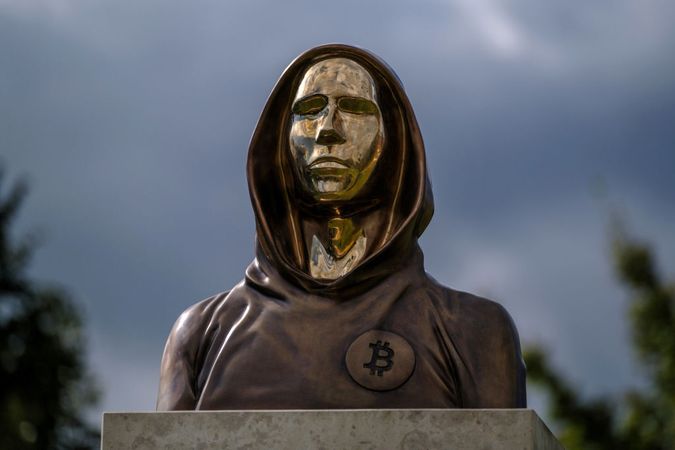
Bitcoin mined for pennies in 2010 moves after 16 years, now worth $8.5 million
A significant quantity of 100 Bitcoin, originating from two distinct mining rewards during Bitcoin’s foundational 'Satoshi era' around 2010, has recently been transferred. These particular coins had remained untouched and dormant for more than 16 years since their creation. The movement marks the awakening of a substantial early accumulation, which at the time of its transfer, commanded a value of approximately $8.5 million. Such awakenings of 'Satoshi-era' bitcoins are closely observed within the community, often prompting discussion about the identities of early adopters and the long-term HODL phenomenon.
Permabits Livestream - Hashrate Heating with Permaculture
satd 0.6.0: solo mine directly to your node
Arkpool: Bitaxe mining with low 1 sat minimum, hourly payouts.
VanEck’s Matthew Sigel: Path to $500k BTC Runs Through Gold
VanEck's Matthew Sigel articulates a vision for Bitcoin's substantial growth, projecting a path to $500,000, which he suggests involves a strategic interplay with gold. A core component of his thesis positions Bitcoin miners as crucial assets within the emerging artificial intelligence industry. Sigel contends that these miners, leveraging their existing power contracts, effectively control what could be considered AI's most critical and scarce resource. Furthermore, he explains that by securing long-term leases related to AI infrastructure and energy demands, Bitcoin miners are poised to unlock significant, currently undervalued potential. This perspective from an institutional figure underscores the evolving economic importance of the Bitcoin mining sector and its broader implications for Bitcoin's long-term valuation and ecosystem.
⛏️ Bitcoin Mining - Producing allergy medicine with solar powered hashrate
⛏️ Bitcoin Mining - My clothes dryer mines Bitcoin
The provided article content is truncated and only displays "Comments". However, the title, "⛏️ Bitcoin Mining - My clothes dryer mines Bitcoin," strongly suggests that the full article would explore the novel and perhaps unconventional concept of integrating Bitcoin mining operations with a common household appliance, specifically a clothes dryer. It would likely discuss the practical aspects, potential benefits, challenges, energy considerations, or the general feasibility of such a unique home-based mining setup. The discussion would probably revolve around resource optimization, heat recapture, or other innovative approaches to small-scale Bitcoin mining.
The Relentless Pursuit of a Bitcoin Block
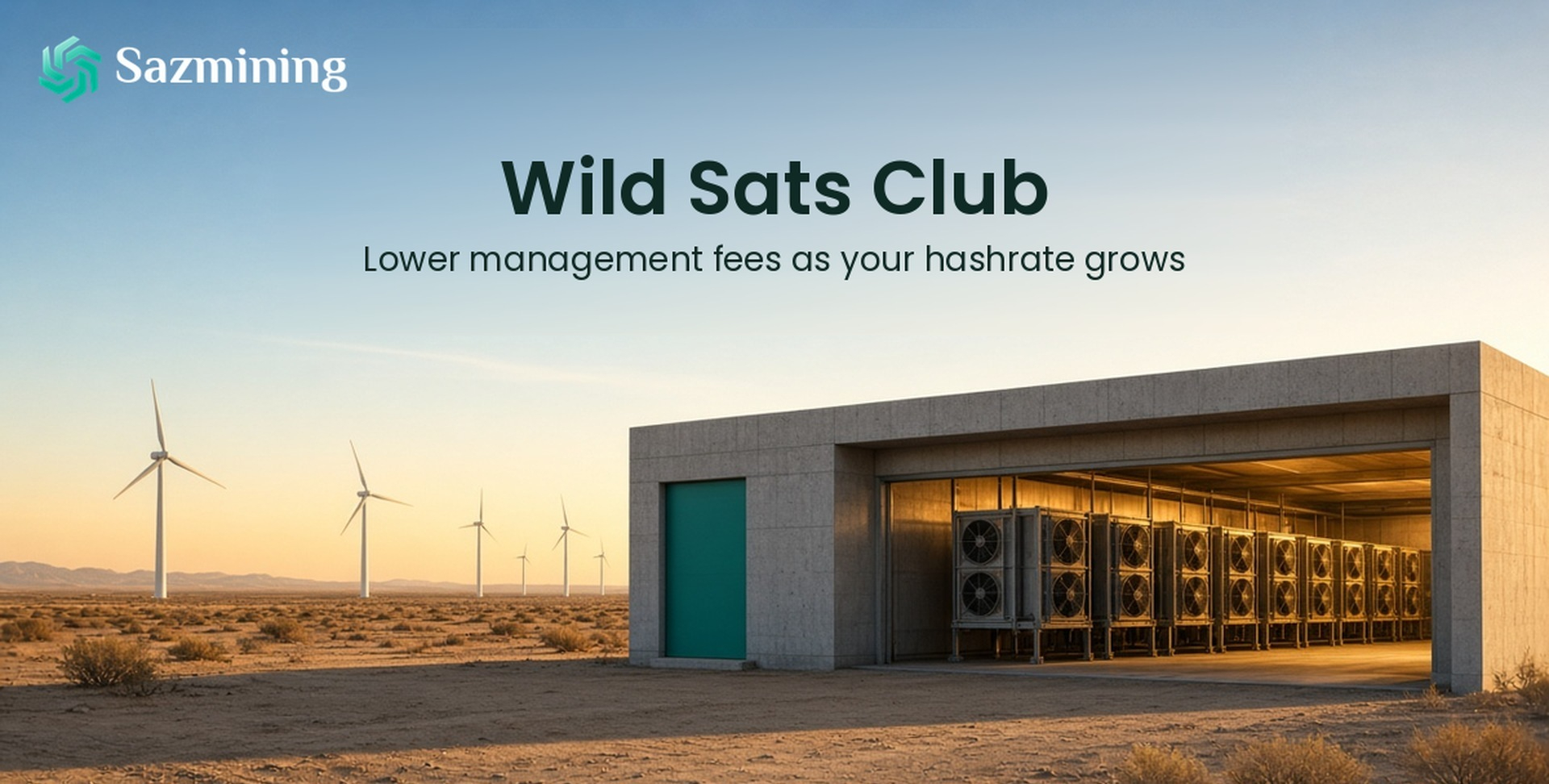
Sazmining Launches the Wild Sats Club, a Loyalty Program That Discounts Mining Management Fees as Customer Hashrate Grows
Sazmining, a Bitcoin Mining as a Service company established in 2020 and led by CEO and Co-Founder Kent Halliburton, has officially launched its new loyalty program called the Wild Sats Club. This program introduces a four-tiered structure that aims to reduce the management fees paid by customers as their accumulated petahash under management expands. The Wild Sats Club is immediately accessible to both current and prospective customers starting today.
Peter Todd Joins MARA to Lead Private Mempool Slipstream
Peter Todd, a prominent figure in the Bitcoin community, has officially joined the MARA Foundation to spearhead the development and operation of Slipstream. This service is designed as a private Bitcoin mempool solution specifically for miners. As lead maintainer, Todd will be responsible for enhancing and managing Slipstream, which enables users to submit their Bitcoin transactions directly to MARA Pool, the company's mining operation, effectively bypassing the conventional public mempool.

Bitcoin Optech Newsletter #423 Recap Podcast
The Bitcoin Optech Newsletter #423 Recap Podcast, featuring Mark Erhardt, Gustavo Flores Echaiz, and Mike Schmidt, delved into recent Bitcoin ecosystem developments. Key discussions covered news items such as Vardiff controllers for slowing miners, Utreexo improvements for initial block download, and a new BIP draft for unspendable internal keys. Updates to services and client software included BitBoxApp's integration of Spark-based Lightning payments, the Covenants.diy script editor, and the EntropyLab offline key calculator. The podcast also highlighted the Eclair 0.14.3 release and several significant code and documentation changes across Bitcoin Core, including pull requests #35445, #36076, #36150, #36174, #34743, #36081, #35975, and BIPs pull request #2241.
Bitcoin Optech Newsletter #423
Bitcoin Optech Newsletter #423 covers an analysis of mining pool difficulty controllers, a proposed improvement for Utreexo’s initial block download (IBD), and a draft BIP for specifying unspendable taproot internal keys. The newsletter details Eric Price’s findings on how variable difficulty (vardiff) controllers, used by mining pools, can strand miners that slow down. Vardiff controllers adjust a miner's share difficulty based on their share submission rate. The issue arises when a miner slows, and the controller, updating only upon receiving shares, fails to lower the difficulty, leaving the miner stuck with a target suited for their previous, higher speed. Price argues that parameter adjustments are insufficient because the controller cannot estimate a rate from shares that don't arrive. His proposed fix is a timer that automatically lowers difficulty after a set interval passes without a share from the miner. While the Stratum v2 reference implementation has a similar mechanism, it recovers slowly for long-lived connections, and Ckpool recomputes only on shares. Price released a 'shaping proxy' for testing this behavior, and Anthony Towns suggested handling such adjustments within local proxies or gateways in Stratum v2 and DATUM deployments.
Bitcoin Optech Newsletter #421 Recap Podcast
The Bitcoin Optech Newsletter #421 Recap Podcast features discussions from Mark “Murch” Erhardt, Gustavo Flores Echaiz, Mike Schmidt, and others, covering a range of technical Bitcoin and Lightning Network developments. Key news items included the proposal for using silent payments for miner payouts within coinbase transactions and the responsible disclosure of a denial-of-service vulnerability in Core Lightning (CLN). The podcast also delved into ongoing discussions about changing consensus, specifically focusing on continued work on Post-Quantum Cryptography (PQC) output types, the DropKick commit/reveal PQC rescue mechanism, the SHRINCS draft BIP, and demonstrations of BIP448 and CSFS/CTV applications. Furthermore, the recap highlighted recent releases and release candidates, including Core Lightning 26.06.7, LND v0.21.3-beta, and LND v0.20.4-beta. Lastly, notable code and documentation changes were discussed, referencing specific pull requests in critical projects such as Bitcoin Core (#36111, #36032), Core Lightning (#9435), Eclair (#3368, #3366), and LND (#11090), underscoring continuous innovation and improvements within the Bitcoin ecosystem.
Bitcoin Optech Newsletter #421
Bitcoin Optech Newsletter #421 highlights two key developments in the Bitcoin ecosystem. Firstly, `average_gary` presented an innovative idea on Delving Bitcoin for mining pools to pay miners using `silent payments` directly within the `coinbase transaction`. This method aims to significantly improve miner privacy by allowing them to share a static silent payment address through a `Stratum v2` encrypted channel, thereby avoiding the privacy risks associated with compromised pool databases holding `xpub`s. To adapt `BIP352 silent payments` for coinbase transactions, which lack input public keys, the pool generates an ephemeral private key to derive a sending public key (`A_send`). This `A_send` is then hashed with the block height to ensure uniqueness and prevent malicious grinding, before being included in the `coinbase scriptSig` for the miner to scan. Feedback is currently sought to formalize this proposal. Secondly, the newsletter reported the responsible disclosure of a critical `denial-of-service (DoS) vulnerability` impacting `Core Lightning (CLN)` nodes. `Erick Cestari` detailed this flaw on Delving Bitcoin, specifying that it affects `CLN versions prior to 25.09`.
loading payment rails…