Bubbles — signal by topic
size = articles (7d) · editorials by Cayce127 articles in security — bigger & brighter = stronger signal
Bennu: An experiment for a Bitcoin wallet with primary UX/UI is E2EE group chat
9dSteal My Bitcoin

We owe you an apology | Keystone Hardware Wallet
9dNew release: Electrum 4.8.3. Fixes a critical security issue. All users upgrade!
Electrum, a widely used desktop Bitcoin wallet, has announced the immediate release of version 4.8.3. This urgent update is critical as it addresses and fixes a significant security vulnerability present in previous iterations of the software. All Electrum users are strongly advised to upgrade their wallet application to this latest version without delay to safeguard their Bitcoin holdings from potential exploits and ensure the continued integrity and security of their funds. The release underscores the importance of prompt software updates, especially for self-custody tools within the Bitcoin ecosystem.

Bitcoin Core Rewrites Its Security Policy for a World Where AI Finds Bugs in One Prompt
Bitcoin Core developers are overhauling their security policy in response to the growing threat of artificial intelligence being used to quickly discover software vulnerabilities. The updated policy dictates an immediate response to flaws categorized as “easily discoverable.” This means that developers will now backport necessary fixes and issue new releases without delay, abandoning the previous practice of long embargo periods. The change reflects an acknowledgment that advanced AI tools can potentially allow attackers to surface critical bugs with a single prompt, necessitating a more agile and proactive security approach to protect the Bitcoin protocol's integrity.

Bitcoin Core Ends Long Embargoes for Bugs AI Can Rediscover
Bitcoin Core has revised its approach to handling software vulnerabilities, specifically for bugs that Artificial Intelligence (AI) tools can readily identify. The new policy discontinues the previous practice of long embargo periods for these types of vulnerabilities. Instead, Bitcoin Core will now prioritize and expedite both the disclosure of such bugs and the implementation of their respective fixes. This strategic change aims to enhance the speed and efficiency of addressing security weaknesses within the core Bitcoin software, particularly those that are easily discoverable by automated means.

floppy39 - floppy makes a bootable floppy image that generates seeds
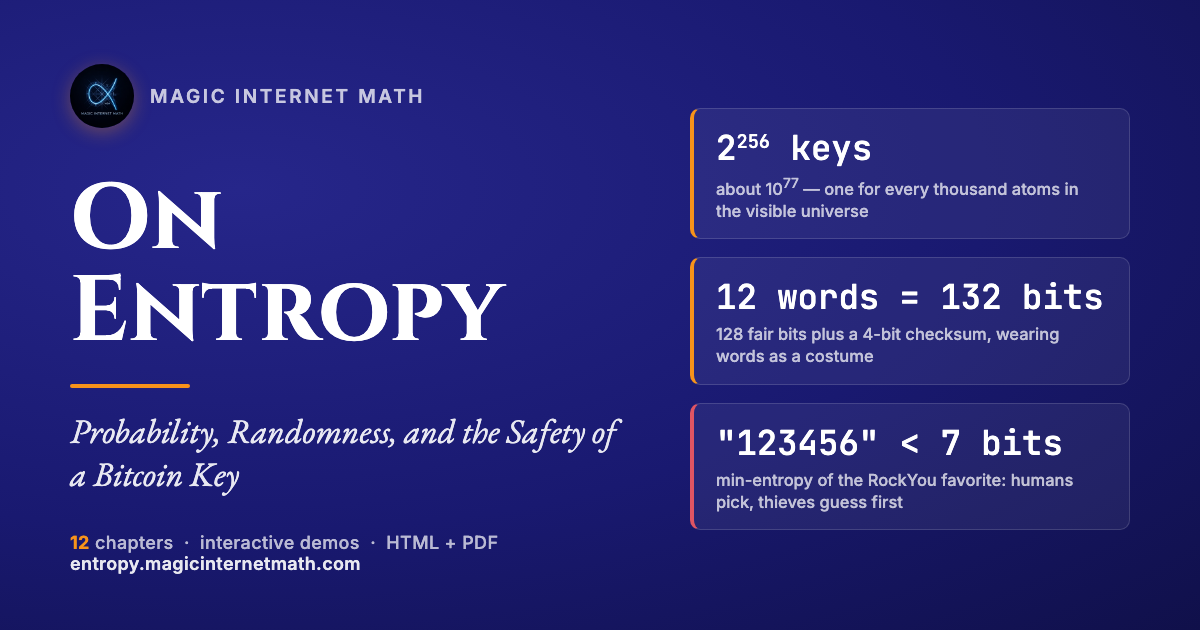
On Entropy - Probability, Randomness, and the Safety of a Bitcoin Key
Off-wallet: opensource hardware wallet for Gameboy Color
12dCan Bitcoin Payments Survive the AI Onslaught? — Calle, joschisan, Elias Rohrer,
Are there any FROST-capable wallets that I can run on old phones?
5 alternatives to Ledger to store your Bitcoin
13dElectrum CLINK Plugin v.0.0.13 released

Liquid Network Announces Final Stages of Recovery Following Massive Hack
13d
Mt. Gox pushes creditor repayment deadline to 2027 in sixth extension
14d
Bitcoin Optech Newsletter #427 Recap Podcast
The Bitcoin Optech Newsletter #427 Recap Podcast features Mark “Murch” Erhardt, Gustavo Flores Echaiz, Mike Schmidt, Erick Cestari, and Adam Gibson discussing the latest developments in the Bitcoin ecosystem. Key topics from the newsletter include the disclosure and resolution of two Denial-of-Service (DoS) vulnerabilities in Eclair v0.14.1, a significant Lightning Network implementation. The podcast also delves into the concept of offchain contracts operating within Lightning channels, exploring their potential implications. Furthermore, the discussion covers releases and release candidates, notably highlighting Bitcoin Core 32.0rc4, indicating progress in the foundational Bitcoin protocol. The hosts and guests also reviewed numerous notable code and documentation changes across various projects, including multiple updates to Eclair (e.g., #3396, #3399, #3395, #3401), enhancements in the Lightning Development Kit (LDK) (#5080, #5087), updates to the Lightning Network Daemon (LND) (#11068), improvements in Rust Bitcoin (#6956), and changes in the Bitcoin Development Kit (BDK) (#2319). This recap provides an in-depth look at the technical advancements and ongoing work shaping Bitcoin and the Lightning Network.
I published a threat model for a SeedSigner on a Nintendo DSi. Tear it apart.
The article announces the publication of a detailed threat model specifically developed for a SeedSigner device implemented on a Nintendo DSi. A SeedSigner is an open-source, air-gapped hardware signing device widely utilized by Bitcoin users for enhanced security and self-custody of their funds. By repurposing a Nintendo DSi, a common consumer electronic device, the project exemplifies the innovative approaches within the Bitcoin community to create cost-effective and secure signing solutions. The core purpose of a threat model is to systematically identify and analyze potential vulnerabilities, attack vectors, and risks inherent in a system. For a SeedSigner on a DSi, this would involve examining potential weaknesses ranging from supply chain attacks on components, software exploits specific to the DSi's architecture, and physical tampering attempts, to operational security risks. The invitation to "tear it apart" signals a call for peer review and community auditing, a crucial practice in open-source security projects to identify unforeseen flaws and harden the overall resilience of the device against real-world threats. This collaborative scrutiny aims to ensure the highest possible standard of security for users employing this DIY Bitcoin signing solution.
Govt ordered to return 497.82 bitcoin to 9 cheated in scheme
A government entity has received a court order mandating the return of 497.82 Bitcoin to nine individuals who were identified as victims of a fraudulent scheme. The order signifies a legal precedent for the restitution of digital assets and highlights governmental involvement in resolving cases of fraud involving Bitcoin, underscoring the growing intersection of traditional legal systems and the Bitcoin ecosystem.

Receive-only Lightning checkout: a hacked server can’t drain your node

Corisco: Open-source Lightning wallet where keys live on an HW device

Satoshi-era bitcoin faces a bigger quantum threat after Google’s new Willow breakthrough
Google has announced a significant breakthrough with its new Willow quantum chip, which can prepare special quantum states essential for advanced calculations with approximately 40 times fewer errors than prior technologies. This substantial reduction in error rates directly addresses a critical hardware bottleneck in quantum computing development. The article underscores the implication of this advancement by stating that it brings closer the potential future capability to crack existing cryptographic protections, specifically citing "bitcoin wallets." This development signals an accelerated long-term quantum threat to the security of Bitcoin's cryptographic protocols, particularly for older 'Satoshi-era' bitcoins, by making the theoretical ability to compromise private keys more tangible in the future.

Claude Mythos 5 cuts the quantum circuit for cracking elliptic curves by 17x
TABConf 8 Recap: Bitcoin Names, Seed Phrase Entropy, and AI vs Bitcoin

Poetic Justice: Scammer Lost $5M in Bitcoin After Being Targeted by Ledger Thieves
17dloading payment rails…