Bubbles — signal by topic
size = articles (7d) · editorials by Cayce158 articles in protocol — bigger & brighter = stronger signal

Ten Years Ago Today: The First Lightning Transaction On Bitcoin Testnet (2016)
SN and Nostr Share on PREDYX
31dMy first Taproot Asset payment over the Lightning Network
Beyond Lightning: Building New Layers on Bitcoin - A Block with Tiero
This article, titled "Beyond Lightning: Building New Layers on Bitcoin - A Block with Tiero," delves into the cutting-edge developments extending the capabilities of the Bitcoin blockchain. It explores various innovations and architectural expansions that go beyond the well-established Lightning Network, aiming to introduce new layers directly on or deeply integrated with Bitcoin. The discussion likely covers different approaches to scaling, enhancing functionality, and creating novel applications that leverage Bitcoin's foundational security and decentralization. Featuring a segment or interview with "Tiero," the content presumably offers expert insights into the technical intricacies, challenges, and future potential of these emerging layers, highlighting their impact on Bitcoin's evolution and its broader ecosystem.
New swap tools for going onchain <-> lightning
Ecash Ecosystem Rises to Challenge in the Defense of Decentralized Custody
At Ecash Hackday Berlin, Fedimint and Cashu developers showcased a unified federation across three distinct codebases. Fedi CEO Obi Nwosu highlighted this demo as a direct solution to the software-monoculture risks he previously identified in decentralized custody, drawing lessons from past experiences with systems like Liquid and Coldcard. The article, originating from Bitcoin Magazine and penned by Obi Nwosu, emphasizes advancements in the Ecash Ecosystem to bolster decentralized custody.
Fedimint discloses a bug in Lightning gateway's LNv2 payment handling

Joinstr: Coinjoin pools using MuSig2 and pre-signed transactions.
Joinstr presents a novel implementation for Coinjoin operations within the Bitcoin ecosystem, focusing on enhancing transaction privacy and fungibility. The system leverages advanced cryptographic techniques, specifically MuSig2, a sophisticated multi-signature scheme that allows for compact and efficient transaction constructions. Furthermore, Joinstr incorporates the use of pre-signed transactions, which can streamline the coordination process for Coinjoin pools and potentially offer greater flexibility and security guarantees for participants. This approach aims to provide a more robust and scalable solution for achieving improved on-chain privacy for Bitcoin users by making transaction inputs and outputs harder to link through collaborative mixing.
ACINQ/eclair · Release v0.14.3 · upgrade highly recommended
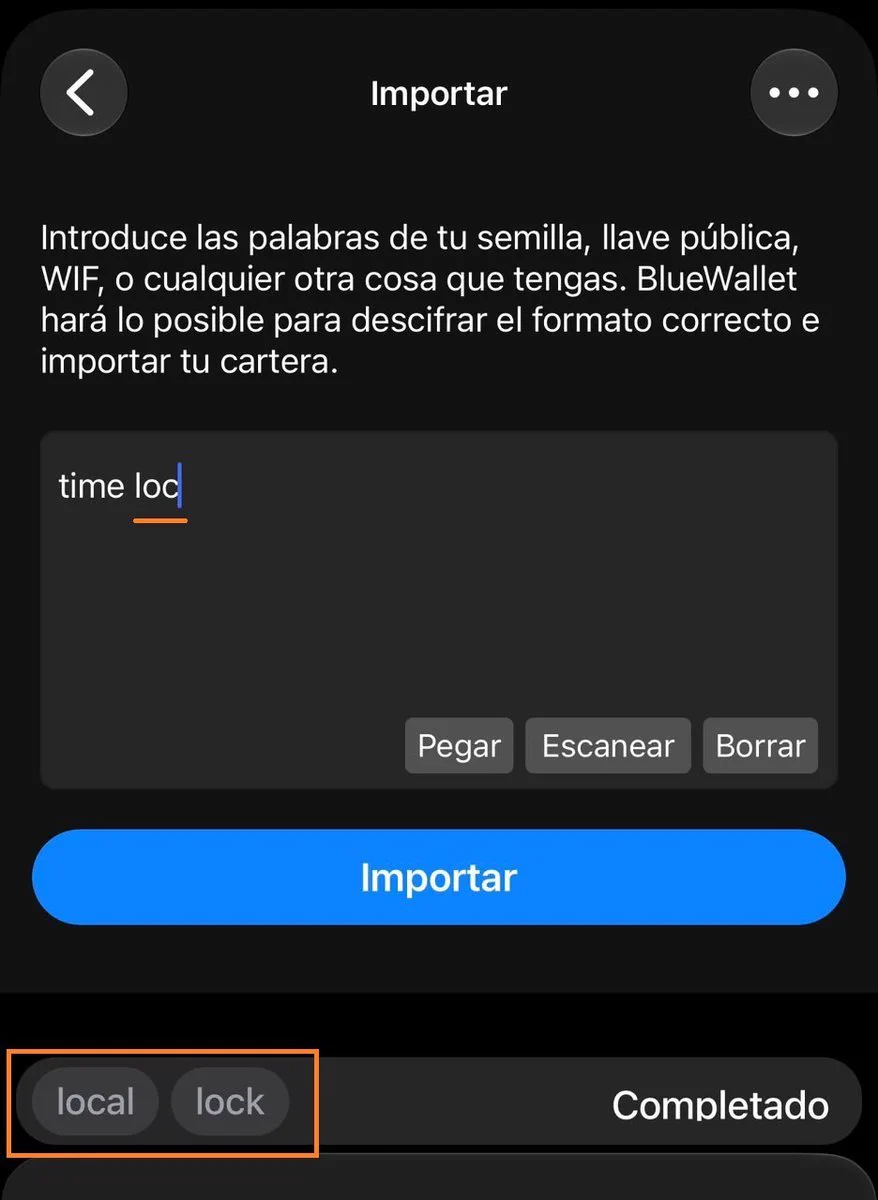
BlueWallet v8.0.2. ➜ Mejora la importación de semillas BIP39.
BlueWallet, a widely recognized non-custodial mobile wallet for Bitcoin and the Lightning Network, has announced the release of its version 8.0.2 update. The primary enhancement in this new iteration is a significant improvement to the functionality for importing BIP39 seed phrases. BIP39 is an essential industry standard that facilitates the creation and restoration of mnemonic phrases, which are human-readable representations of private keys. By enhancing the seed import process, BlueWallet aims to bolster the reliability and user experience for individuals looking to restore their wallets, transfer funds between compatible wallets, or set up new devices. This update directly contributes to strengthening the security and overall self-custody capabilities of Bitcoin users, empowering them to manage their digital assets with greater confidence and control.

Bitcoin Optech Newsletter #425 Recap Podcast
The Bitcoin Optech Newsletter #425 Recap Podcast, featuring Gustavo Flores Echaiz, Brandon Black, and Matt Morehouse, provides a deep dive into recent Bitcoin and Lightning Network development updates. Key news items covered include the disclosure of two Denial-of-Service (DoS) vulnerabilities affecting the Eclair Lightning implementation and a proposal to enhance wallet label synchronization, aiming to improve user experience and privacy. Discussions around potential consensus changes explored advanced topics such as the ongoing evaluation of Post-Quantum Cryptography (PQC) output types for Bitcoin's future, proposals for block-wide signature aggregation using SNARKs for scalability and privacy, and a detailed analysis of chain length bounds in the context of BIP54 time warp fixes. The podcast also compared various covenant proposals for implementing secure Bitcoin vaults and introduced "depots" for probabilistic Lightning channels, a concept to potentially boost Lightning Network efficiency. The recap further highlighted recent releases and release candidates, specifically mentioning LND v0.21.4-beta.rc1 and LND v0.20.5-beta.rc1, signifying active development within the Lightning ecosystem. Lastly, the podcast detailed numerous notable code and documentation changes, citing several merged pull requests across critical Bitcoin infrastructure projects. This included a series of updates to Bitcoin Core (e.g., #29278, #35984, #35301, #36312, #36284, #35752, #35813), a significant update to BIPs (#2276), as well as important contributions to the Lightning Development Kit (LDK #4993) and the Lightning Network Daemon (LND #11173, #11190). These updates collectively underscore the continuous, rigorous development efforts within the Bitcoin protocol and its scaling layers.

Top Bitcoin Blockchain Visualizers For Your Home And Office
This article highlights various tools designed to visualize and sonify the Bitcoin blockchain and mempool flow, suitable for home and office displays rather than trading. It introduces OmPool, an Omarchy release scheduled for September 2026, which will sonify live Bitcoin mempool activity directly in the terminal. The article also references existing visualizers such as Bitlisten, Proof of Sound, and the option to self-host mempool.space. Published by Bitcoin Magazine and authored by Juan Galt, the piece emphasizes engaging with the Bitcoin ecosystem through these unique and informative display options.
anyone sold BIP-110 / BLAKE2b fork coins, or leave the UTXOs alone?

Descriptor syntax for hash preimages
The concept of 'descriptor syntax for hash preimages' refers to the development of a standardized language or format within the Bitcoin ecosystem for describing and managing cryptographic hash preimages. In Bitcoin, hash preimages are crucial components, particularly in constructs like Hashed Timelock Contracts (HTLCs) that form the backbone of the Lightning Network. These contracts require the revelation of a specific preimage to unlock funds, ensuring atomic swaps and secure payment channels. Bitcoin Output Descriptors, introduced in Bitcoin Core, already provide a compact and standardized way for wallets to describe and manage UTXOs and their spending conditions. Extending this descriptor syntax to specifically handle hash preimages would offer several significant advantages for Bitcoin protocol development and wallet functionality. It would enable wallets to more easily track, identify, and interact with funds locked by preimage-dependent scripts, such as those in HTLCs. This could simplify the construction and validation of complex Bitcoin scripts involving conditional payments, making it easier for developers to integrate advanced features like multi-party computations or sophisticated smart contracts. Furthermore, standardizing how preimages are referenced within descriptors would enhance interoperability between different Bitcoin implementations, tools, and services that rely on these cryptographic primitives for secure, conditional transactions.
Resurrected PHP binding for secp256k1
Bitchat fork: Sonar - a private chat on Bluetooth mesh and Nostr
35dBiggest Channel Opened Today (4.0 BTC) + New Node Spotlight (020a5266a611f4ca8…)
Block 170 : The First Transaction — Short Film
Bitcoin Beginners Newsletter #118
36d
Core Lightning warns attackers are targeting unpatched Bitcoin nodes
Core Lightning has issued an urgent security warning, indicating that attackers are actively targeting unpatched Bitcoin nodes running their software. Operators utilizing Core Lightning version 26.06.7 or any earlier versions are strongly advised to upgrade their nodes without delay. This alert underscores a critical vulnerability within the Lightning Network's infrastructure, emphasizing the necessity of immediate software updates to protect the network and its users from potential exploits by malicious actors.
Bitcoin Optech Newsletter #425
This week's Bitcoin Optech Newsletter #425 highlights two critical denial-of-service (DoS) vulnerabilities affecting older versions of Eclair (v0.13.1 and earlier), which have since been fixed in v0.14.0. The first vulnerability stemmed from inefficient feature bit parsing, where a single maximum-length init message could allocate 300 MB of memory and occupy a parsing thread for 300 ms, enabling attackers to quickly disconnect peers and exhaust memory. This was discovered using the `smite` LN fuzzer. The second DoS flaw was in gossip queries, where zlib decompression of legacy `query_short_channel_ids` messages lacked an output limit, allowing a 64 KB message to expand to 64 MB, potentially taking nodes offline. Both attacks required only a BOLT8 handshake. The newsletter also outlines a proposal for secure wallet label synchronization across devices and regular updates on Bitcoin consensus rule discussions and infrastructure software changes.

New 'Bitcoin Ecology' series from Dhruv Bansal: Bitcoin Is All You Need
Peter Todd Joins MARA to Lead Private Mempool Slipstream
Peter Todd, a prominent figure in the Bitcoin community, has officially joined the MARA Foundation to spearhead the development and operation of Slipstream. This service is designed as a private Bitcoin mempool solution specifically for miners. As lead maintainer, Todd will be responsible for enhancing and managing Slipstream, which enables users to submit their Bitcoin transactions directly to MARA Pool, the company's mining operation, effectively bypassing the conventional public mempool.

Peter Todd, Joins MARA Foundation as Lead Maintainer of Slipstream
37dloading payment rails…