Bubbles — signal by topic
size = articles (7d) · editorials by Cayce64 articles in privacy — bigger & brighter = stronger signal
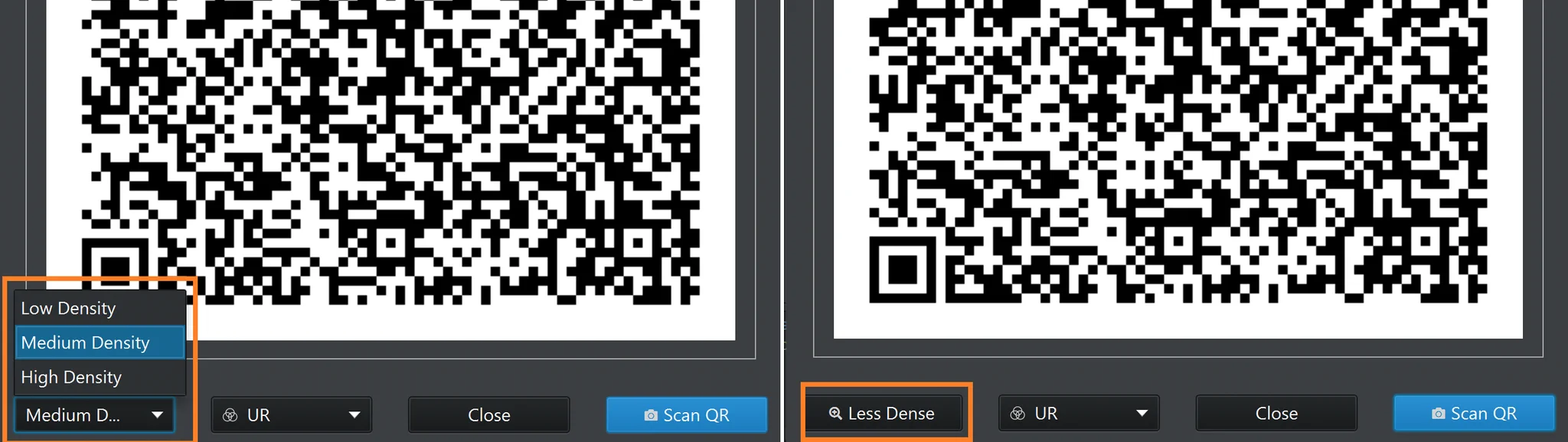
Sparrow Wallet 2.5.6 ➜ Mejoras en códigos QR
The article, though truncated, announces the release of Sparrow Wallet version 2.5.6. This update specifically focuses on "Mejoras en códigos QR," or improvements to QR codes. These enhancements likely aim to improve the user experience when scanning or displaying Bitcoin addresses, partially signed Bitcoin transactions (PSBTs), or other relevant transaction data. As Sparrow Wallet is a popular desktop application for advanced Bitcoin users, known for its robust features for privacy, security, and hardware wallet integration, updates to its interface components like QR codes are significant for usability and operational security. Such improvements could involve better scanning accuracy, support for new QR code formats, or enhanced visual clarity, ultimately streamlining the process of sending and receiving Bitcoin or signing complex transactions.

No CBDC, no digital ID. No KYC
RoboSats v0.8.8-alpha: Garage Key, encrypted Nostr chat, and security fixes
RoboSats has released v0.8.8-alpha, an update packed with features aimed at enhancing the privacy, security, and user experience of its non-KYC Bitcoin Lightning exchange. A standout new feature is "Garage Key," which provides users with persistent session IDs without requiring the storage of personal data in browser history or cookies. This innovation significantly boosts user privacy by making sessions less trackable while maintaining convenience for returning traders. Furthermore, the update integrates encrypted chat functionality powered by Nostr, a decentralized social protocol. This allows users to communicate securely and privately during peer-to-peer trade negotiations directly within the RoboSats platform, reducing reliance on third-party messaging services and fortifying user anonymity. The release also includes critical security fixes, addressing various vulnerabilities to strengthen the platform's overall resilience and protect user funds and data. These developments collectively underscore RoboSats' commitment to providing a robust, private, and censorship-resistant marketplace for Bitcoin exchange on the Lightning Network, aligning with core Bitcoin principles of financial sovereignty and personal privacy.
SHOW SN: I made a contact page that lets you send me nostr DMs (if you zap)
3d
Binance hacker splits $1.4 billion of bitcoin into 19 wallets that no one can freeze
A hacker implicated in the Binance security breach has moved and split a substantial sum of Bitcoin, approximately $1.4 billion, which amounts to 18,270 BTC. These funds have been distributed into 19 distinct wallets. A detailed blockchain analysis conducted by CoinDesk reveals that 17 of these wallets individually hold exactly 1,000 BTC each. The article highlights that these assets remain beyond the reach of any external freezing attempts, underscoring Bitcoin's inherent censorship-resistant property. As of the time of the report, these divided coins have not undergone any further movement since Thursday night, indicating a period of dormancy in the hacker's activity following the initial distribution.

Bitcoin Optech Newsletter #429
Bitcoin Optech Newsletter #429 covers a new protocol for silent payment transactions from multiparty wallets, details a denial-of-service vulnerability affecting older Core Lightning versions, and explains Bitcoin Core's updated security policy for easily discoverable vulnerabilities. The newsletter also includes regular sections with Bitcoin Stack Exchange Q&A, new releases, and notable changes to Bitcoin infrastructure software. Key news includes Oleksandr Kurbatov's proposal on Delving Bitcoin for a protocol to enable multiparty inputs in silent payment transactions. This addresses BIP352's current recommendation against such inputs due to a lack of security proof. The proposed protocol allows a multiparty sender to compute the ECDH share as a weighted sum of signers' contributions, secured by an aggregated DLEQ proof (AggDLEQ) which proves the ECDH share's correct derivation from the input key. This design is compatible with existing multiparty protocols like FROST and MuSig2. The process involves a two-round interaction where a coordinator provides context, signers generate nonces and initial messages for AggDLEQ, and then contribute to a final proof based on a challenge. Kurbatov asserts that this protocol requires no modifications to BIP352, BIP374, BIP375, MuSig2, or FROST.
CoinOS v3 - FIFO for coins to help with expiring.
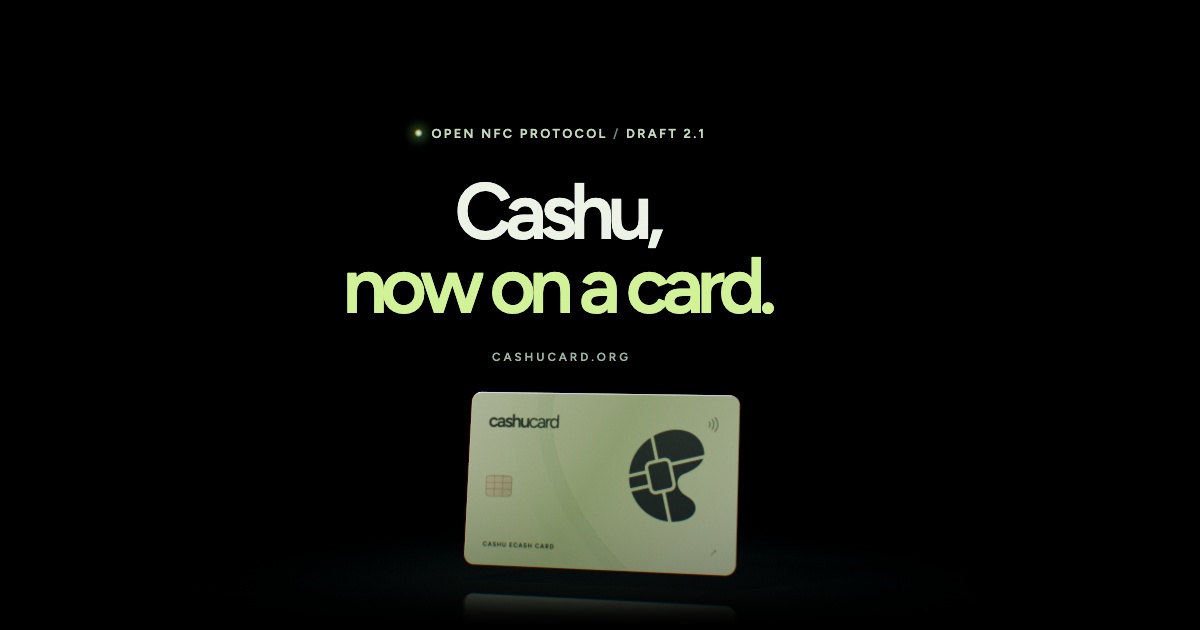
Cashu Card | Experimental NFC ecash protocol
4dIntroducing Bitkit 3.0
JoinMarket stats dashboard

Private, fast USDT is coming to Bitcoin. Can it compete with Ethereum and Tron?
5d
There is a local Desktop Editor with optional Nostr capabilities
5dAnyone else having issue with Tor and Start9 today
5dA new versions of the OpenTimestamps Client released | Peter Todd
Nut November - A month-long hackathon for Cashu builders
7dUnbeholden Wallet: a watch-only Bitcoin wallet in your browser
The article introduces 'Unbeholden Wallet', a new watch-only Bitcoin wallet designed to operate directly within a web browser. This tool enables users to monitor their Bitcoin holdings and transaction history without exposing their private keys online. Watch-only functionality is crucial for enhanced security, allowing users to keep their spending keys offline in cold storage while still being able to track their balances and incoming transactions conveniently. By being browser-based, it aims to offer accessibility and ease of use, potentially utilizing client-side processing to maintain user privacy and minimize trust in external servers.
Wasabi Wallet v2.8.5 released

Payjoin <> CISA — Last Week in Bitcoin (Oct 19 - 25)

bitcoin-pisa demo: payjoin wiht cross-input signature aggregation

Keystone customers say breach exposed data the hardware wallet maker promised to delete
9dBennu: An experiment for a Bitcoin wallet with primary UX/UI is E2EE group chat
9dSatsDNS: DNS hosting, secondary DNS and dynamic DNS paid in sats, no account
The article introduces SatsDNS, a novel service offering various Domain Name System (DNS) solutions, including primary DNS hosting, secondary DNS services for redundancy, and dynamic DNS capabilities. The distinguishing features of SatsDNS are its explicit integration with the Bitcoin ecosystem: all services are paid for exclusively in satoshis (sats), the smallest unit of Bitcoin. Crucially, the service emphasizes a "no account" policy, which translates to a significant boost in user privacy and sovereignty. By eliminating the need for traditional user accounts and associated KYC (Know Your Customer) requirements, SatsDNS allows individuals and organizations to manage their essential internet infrastructure with a higher degree of anonymity and censorship resistance. This approach aligns perfectly with Bitcoin's core tenets of financial freedom and self-sovereignty, enabling users to pay for critical online services without revealing personal identifying information or relying on conventional banking rails. The service caters to individuals and entities seeking to decouple their internet presence from traditional financial and identity systems, leveraging Bitcoin for its peer-to-peer payment rails and inherent privacy benefits. This initiative represents a practical application of Bitcoin beyond simple peer-to-peer payments or investment, embedding it into the fundamental layers of internet operation.

floppy39 - floppy makes a bootable floppy image that generates seeds
Zcash-Style Private Payments on Bitcoin L1 — Aleksei Moskvin, Markus Schofnegger
loading payment rails…