Bubbles — signal by topic
size = articles (7d) · editorials by Cayce127 articles in security — bigger & brighter = stronger signal

Scammer Lost $4.8M in Bitcoin to Tampered Ledger Wallets: Chainalysis
The article details a significant security incident where a scammer lost $4.8 million in Bitcoin. This substantial loss occurred due to the use of tampered Ledger hardware wallets. The scammer had initially accumulated these funds through a 'task scam' – a deceptive scheme that involved recruiting individuals to fabricate product sales and reviews. As part of this scam, victims were promised payment but were subsequently pressured to make further deposits before their promised earnings would be released. The incident underscores critical vulnerabilities that can arise from hardware wallet tampering, emphasizing the necessity for extreme caution and verification of the integrity of custody solutions for all Bitcoin holders. It serves as a stark warning about sophisticated attack vectors and the importance of robust operational security in the Bitcoin ecosystem.

Quantum Alliance forms amid warnings 6.4 million bitcoin face future quantum threat
18d
Scammer gets scammed in Ledger spy-chip exploit, loses almost $5 million in bitcoin
A scammer, who previously defrauded individuals via fake online employment schemes, reportedly lost close to $5 million worth of Bitcoin. This significant loss occurred as a result of an exploit targeting compromised hardware wallets, specifically linked to Ledger devices. Blockchain analytics firm Chainalysis identified the fraudster as one of the largest victims of these security vulnerabilities. The incident highlights the pervasive risks within the digital asset ecosystem, demonstrating that even those perpetrating scams can fall victim to more sophisticated attacks. The event underscores the critical importance of robust security practices and the potential consequences of hardware wallet compromises, particularly for substantial Bitcoin holdings.

Bitcoin Optech Newsletter #427
Bitcoin Optech Newsletter #427 details the disclosure and fixes for two denial-of-service (DoS) vulnerabilities in Eclair v0.14.0 and earlier, urging users to upgrade to v0.14.1. Erick Cestari posted the responsible disclosure to Delving Bitcoin. The first vulnerability, found by Matt Morehouse, was a race condition in the temporary_channel_id check during channel opening. An attacker could send multiple identical open_channel messages quickly, causing Eclair to create duplicate channel states for one ID, leading to memory leaks of about 1 MB per second until the node ran out of memory or CPU. The second vulnerability, found by Cestari, allowed bypassing Eclair’s limit on unconfirmed pending channels. Attackers could reuse a channel’s final channel_id as a temporary_channel_id for subsequent open_channel messages. The limiter would count the reused ID twice and drop both entries upon a new channel receiving its final ID, preventing the counter from rising while the number of memory-consuming pending channels grew unboundedly. The newsletter also mentions a proposed scheme for complex multi-round contracts within Lightning channels and regular updates on new releases and changes to popular Bitcoin infrastructure software.

Ledger Says Organized Crime Group Spent Millions Targeting Hardware Wallet Users
19d
Charles Edwards: Why Quantum Risk Could Be MASSIVE BTC Upside Catalyst
Charles Edwards identifies several significant catalysts poised to propel Bitcoin to new all-time highs. Among these, he highlights the potential impact of quantum risk as a massive upside driver for BTC. Other crucial factors include shifts in Federal Reserve policy, increasing government adoption of Bitcoin, and the continuous influx of institutional capital into Bitcoin ETFs.

'It Can Take Years': Coinbase Presses for Bitcoin Quantum Migration to Start Now
In a detailed technical post, Coinbase has strongly advocated for the immediate commencement of Bitcoin's multi-year migration to quantum-resistant cryptography. The exchange emphasizes that this critical transition must begin well in advance of any hypothetical 'Q-Day' – the point at which quantum computers could potentially compromise current cryptographic standards. Coinbase's argument lays out specific prerequisites and considerations for this extensive migration, including how it would impact Bitcoin's block space, the need for robust quantum-secure custody solutions, and strategies for managing dormant bitcoin holdings during and after the transition.

Ledger Asks Resellers in Seven Asian Markets to Pull Devices After Suspected $86M Drain
20d
Coinbase, which holds 5% of all bitcoin, wants the quantum fix started now
Coinbase, a major Bitcoin custodian, is advocating for immediate action within the Bitcoin community to prepare for the advent of quantum computing. Their recommendations include the implementation of flexible addresses and the development of a backup quantum-proof key to safeguard Bitcoin holdings against potential future quantum attacks. Furthermore, Coinbase suggests initiating a distinct discussion regarding the handling of lost Bitcoin.
Working Together on Bitcoin’s Post-Quantum Readiness
This article discusses the proactive efforts within the Bitcoin ecosystem to address the potential future threat of quantum computing. It emphasizes the need for collaborative work on "Post-Quantum Readiness" to ensure the long-term security and resilience of the Bitcoin protocol. The focus would be on exploring and implementing quantum-resistant cryptographic solutions to safeguard Bitcoin's elliptic curve digital signature algorithm (ECDSA) against future quantum attacks, thereby protecting user funds and transaction integrity. The article highlights the importance of community-wide research and development to integrate these advanced cryptographic primitives without compromising Bitcoin's fundamental principles of decentralization and immutability.

Coinbase lays out flexible designs as key priority for Bitcoin’s post-quantum migration
Coinbase has publicly shared its strategic priorities regarding Bitcoin's long-term post-quantum security transition. The exchange is strongly advocating for the Bitcoin community to begin early preparations, specifically highlighting the critical need for timely upgrades to existing signature schemes and establishing secure methodologies for the migration of funds to quantum-resistant addresses. This proactive stance from a major institutional entity underscores the perceived importance of addressing potential vulnerabilities from quantum computing before they materialize, ensuring the continued cryptographic integrity of the Bitcoin network.

Researchers Build First Working Post-Quantum Defense for Bitcoin’s Lightning Network
Researchers have reportedly developed the first functional post-quantum defense specifically designed for Bitcoin's Lightning Network. The article from Bitcoin Magazine emphasizes the growing concern about the threat quantum computers could pose to second-layer Bitcoin solutions like Lightning. This research aims to provide necessary protection, indicating that a team has successfully devised a method to safeguard these critical components of the Bitcoin ecosystem from future quantum attacks.
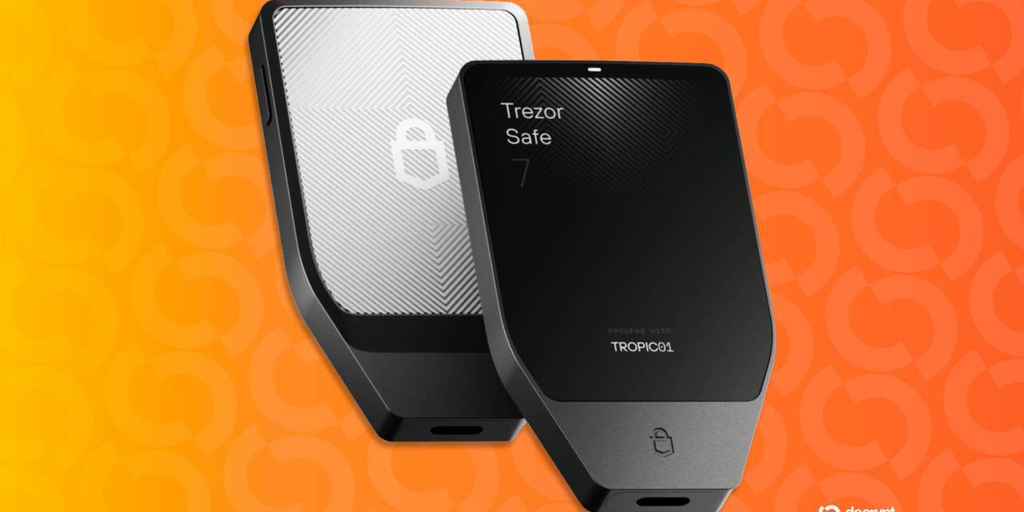
Trezor Cuts Its Resellers After Ledger Finds Spy Implant in Crypto Wallets
21d
Trezor Reduces Number of Resellers Following Ledger Drainage Incident
21dWasabi Wallet v2.8.4 released

Ledger confirms hardware implant in CryptoBilis reseller units as MediaMarkt suspends sales in Europe
21d
Ledger Finds LTE Implant That Stole Recovery Phrases in Suspected $86M Drain
21d
UK court ruling boosts government’s chances of keeping $5 billion in seized bitcoin
A recent UK court ruling has significantly improved the government's prospects of retaining approximately $5 billion worth of seized Bitcoin. This substantial cache of 61,000 BTC was confiscated by the Metropolitan Police as part of their investigation into Zhimin Qian. Qian has already pleaded guilty to orchestrating a large-scale fraud operation that victimized thousands of individuals in China. The court's decision is a key development in the ongoing legal process surrounding the disposition of these digital assets, highlighting the growing intersection of traditional legal frameworks with large-scale cryptocurrency seizures and asset recovery.

Chinese fraud victims lose key court battle over 61,000 Bitcoin
21d
Ledger Investigates Fund Losses Tied to Southeast Asian Reseller After Implant Found in Device
22d
Bitcoin: Firmar una transacción no es lo mismo que transmitirla.
What’s the dumbest thing you did with Bitcoin when you were new?
22d
Adam Back: Blockstream's 2FA Multisig Is Not Self-Custody

[BIP Draft] Co-signer Spending Policies
loading payment rails…