Bubbles — signal by topic
size = articles (7d) · editorials by Cayce853 articles — bigger & brighter = stronger signal
Why SoV -> MoE -> UoA for bitcoin
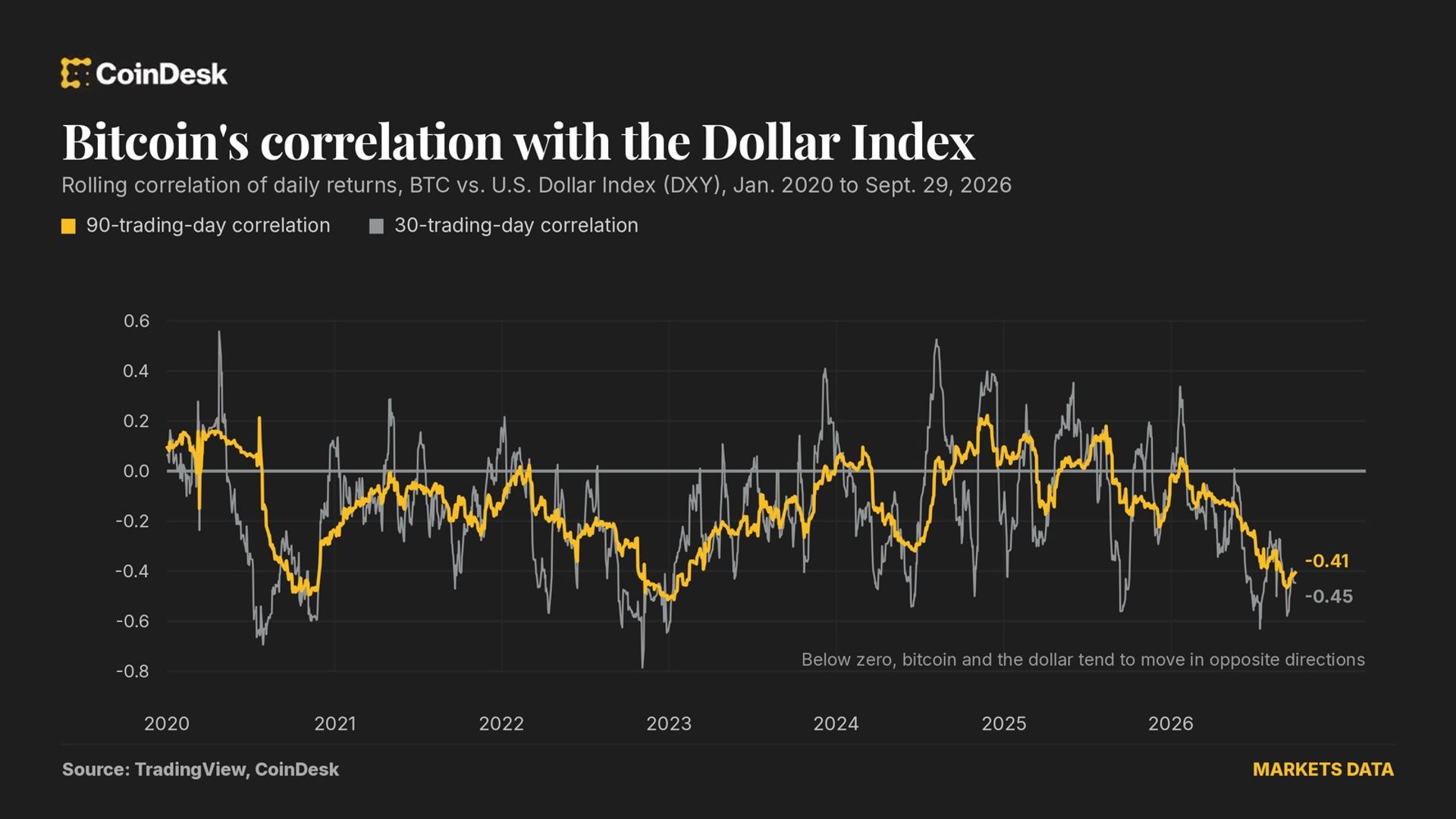
A stronger dollar is a weaker threat to bitcoin than traders think
Bank Runs are Good, Actually: Death to the Central Banks (FT, Toby Nangle)
Research in Public #20: Stacker News paper accepted at WISE 2026
BOOK on BOOKS: "The Bushido of Bitcoin," by Alexandar Svetski

River is forcing new terms that severely restrict account holder options
39dCollector’s Guide: The Bitcoin Standard
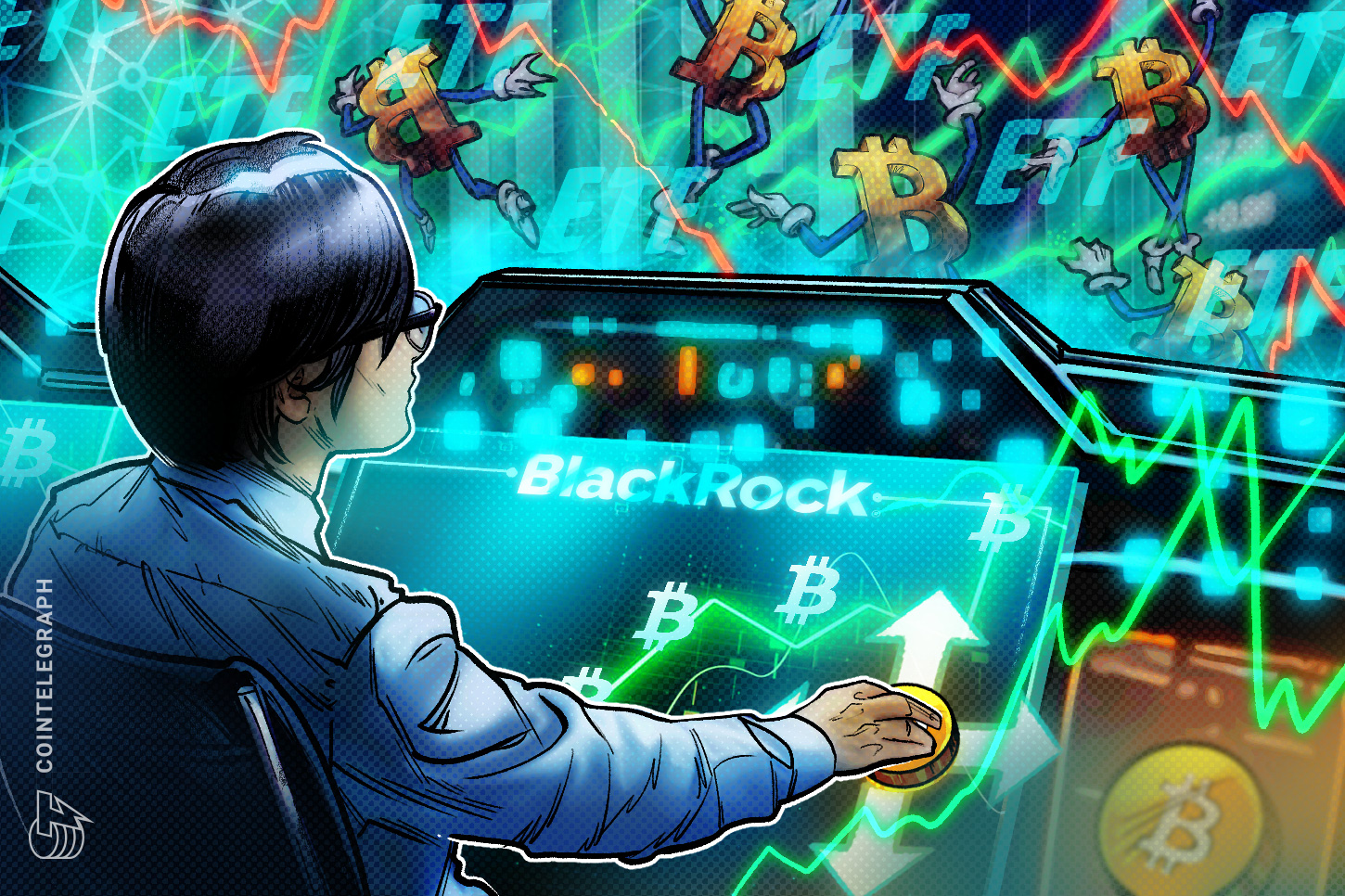
Bitcoin ETF inflows leave institutional demand unclear: CoinShares
CoinShares research indicates that while the iShares Bitcoin ETF (IBIT) provides insights into institutional engagement with Bitcoin, the significant inflows into these spot Bitcoin ETFs do not necessarily equate to direct institutional bets on an appreciating Bitcoin price. The article points out that these inflows could be substantially driven by "basis trades," where institutions leverage arbitrage opportunities between the spot ETF price and Bitcoin futures contracts. This suggests that a portion of the institutional capital flowing into Bitcoin ETFs is part of sophisticated hedging or arbitrage strategies rather than straightforward directional long positions on Bitcoin. Consequently, interpreting ETF inflow data as a direct measure of institutional conviction in Bitcoin's future price growth needs careful consideration, as it can be influenced by market structure and trading strategies.

Bitcoin bounces to $84K after US 30-year bond yield sets 24-year high
39d
Bitcoin Optech Newsletter #424 Recap Podcast
This article is a recap podcast for Bitcoin Optech Newsletter #424, featuring discussions with Gustavo Flores Echaiz, Mike Schmidt, Ahmet Kurt, and Jan B. Key news includes a proposal for a post-quantum Lightning Network. The podcast addresses selected Q&A from Bitcoin Stack Exchange, covering topics such as the drawbacks of using a sum instead of SHA256 for amounts in Taproot signature messages, the necessity of resyncing after a post-BIP110 fork, and whether a Bitcoin node can build a partial UTXO set for validating new transactions. It also highlights recent releases and release candidates, including Bitcoin Core 32.0rc2, Core Lightning 26.06.8, and LDK v0.3-rc2. Furthermore, the recap details notable code and documentation changes across various projects, including Bitcoin Core (#34566), BIPs (#1951, #2224), Core Lightning (#9507, #9508, #9509, #9510, #9513), and LND (#11198, #11146, #11132), all directly contributing to the advancement of the Bitcoin protocol and Lightning Network.
Strategy buys 1,665 Bitcoin for $143M as BTC stack hits 847,666
A significant entity, referred to as "Strategy" (likely MicroStrategy), has announced a substantial acquisition of 1,665 Bitcoin, valued at $143 million. This latest purchase has pushed the entity's total Bitcoin holdings to an impressive 847,666 BTC. The funds for these Bitcoin purchases, as well as for repurchasing STRC preferred stock, were generated through the sale of 1.47 million MSTR shares, which raised $246.2 million. This move underscores the ongoing commitment to accumulating Bitcoin as a primary treasury reserve asset.
BTC price eyes best Q3 in nine years: Three things to know in Bitcoin this week
40dSat & Nah (Satoshi Nakamoto): The Economic Engine of Hyperbitcoinization

IBIT options price trading more calmly after Bitcoin rebound
43d
Bitcoin ETF inflows slow to $191M as six-day streak reaches $2.8B
US spot Bitcoin Exchange-Traded Funds (ETFs) recorded $191 million in inflows on Thursday, indicating a third consecutive day of decelerated daily inflows. Despite this slowdown, the cumulative net inflows for the year-to-date have now reached $787 million. This contribution forms part of a larger six-day streak, during which total inflows into these Bitcoin ETFs amounted to $2.8 billion.

Researchers propose Zcash-style private Bitcoin transfers without a soft fork
Researchers are proposing a novel method to enable private transactions on the Bitcoin network, dubbed "Shielded Bitcoin." This approach aims to introduce Zcash-style privacy features, utilizing zero-knowledge proofs and encrypted notes to obfuscate transaction details. A key aspect of this proposal is its design to achieve these privacy enhancements without necessitating a soft fork, meaning it would not require changes to Bitcoin's fundamental consensus rules. However, the initiative is currently facing scrutiny from other researchers regarding its potential limitations, particularly concerning the true extent of anonymity it can provide and its resilience against future quantum computing threats.

Block brings Bitcoin Lightning payments to x402 for AI agents
Block, a company recognized for its commitment to Bitcoin, has announced the integration of Bitcoin Lightning payments with x402. This initiative aims to establish an open payment standard specifically designed to enable commerce between autonomous AI agents. By bringing Lightning Network capabilities to x402, Block is joining a consortium of prominent technology and finance firms, including Google, Microsoft, AWS, and Coinbase, in backing this standard. This development highlights a significant step towards leveraging Bitcoin's scaling solutions for emerging AI-driven economic models, facilitating efficient and low-cost transactions for agentic AI applications.
Bitcoin Optech Newsletter #424
Bitcoin Optech Newsletter #424 introduces a significant proposal for enhancing the Lightning Network (LN) with post-quantum security, dubbed PQLN. This initiative, detailed by Ahmet Kurt on Delving Bitcoin, aims to upgrade LN's offchain protocols to withstand quantum computer attacks, building upon prior layer-by-layer analyses. A supporting paper and a functional implementation based on rust-lightning are available for testing. The proposal specifically targets offchain components, deliberately avoiding modifications to onchain operations, which would necessitate Bitcoin consensus changes. Key modifications include: Gossip (BOLT7) is updated to distribute post-quantum keys (ML-DSA and ML-KEM) directly through node_announcement messages, which also carry ML-DSA signatures. channel_update messages include only the signature, and keys are pinned to prevent fraudulent substitutions. The channel_announcement message remains unchanged due to its reliance on onchain funding keys. Transport (BOLT8) is modified to implement a hybrid Noise handshake, utilizing two ML-KEM encapsulations—one for the pinned static key and another for a new ephemeral key to ensure forward secrecy, without employing in-band negotiation.
Sequans exits Bitcoin treasury strategy after selling remaining 314 BTC
France-based semiconductor company Sequans has completed the unwinding of its Bitcoin treasury, selling its remaining 314 BTC. This move marks the full divestment from a strategy that previously saw the company hold over 3,200 BTC. The action comes amidst a broader trend where more firms are reportedly reducing their cryptocurrency holdings.
Bitcoin Optech Newsletter #423 Recap Podcast
The Bitcoin Optech Newsletter #423 Recap Podcast, featuring Mark Erhardt, Gustavo Flores Echaiz, and Mike Schmidt, delved into recent Bitcoin ecosystem developments. Key discussions covered news items such as Vardiff controllers for slowing miners, Utreexo improvements for initial block download, and a new BIP draft for unspendable internal keys. Updates to services and client software included BitBoxApp's integration of Spark-based Lightning payments, the Covenants.diy script editor, and the EntropyLab offline key calculator. The podcast also highlighted the Eclair 0.14.3 release and several significant code and documentation changes across Bitcoin Core, including pull requests #35445, #36076, #36150, #36174, #34743, #36081, #35975, and BIPs pull request #2241.
"Don't collect what you can't protect" - Tabconf T shirt giveaway design #4
The article title, "Don't collect what you can't protect" - Tabconf T shirt giveaway design #4, succinctly captures a fundamental principle within the Bitcoin community: the absolute necessity of self-custody and robust personal security. Originating from Tabconf, a renowned Bitcoin-only conference, this slogan functions as a vital admonition for Bitcoin holders to assume full responsibility for the protection of their digital assets. It implicitly warns against the inherent risks associated with entrusting one's Bitcoin to third-party custodians, where the user relinquishes control over their private keys, thereby reinforcing the well-known Bitcoin maxim, "not your keys, not your coins." The context of this being a design for a T-shirt giveaway at the conference suggests a deliberate effort to propagate this foundational security principle widely amongst participants and the broader Bitcoin ecosystem. This reinforces best practices for asset protection against potential threats such as theft, loss, or seizure. Although the article content is merely listed as "Comments," the impactful title alone communicates a potent message concerning operational security and the sovereign right and responsibility to protect one's own wealth in the decentralized Bitcoin network.
Bitcoin Optech Newsletter #423
Bitcoin Optech Newsletter #423 covers an analysis of mining pool difficulty controllers, a proposed improvement for Utreexo’s initial block download (IBD), and a draft BIP for specifying unspendable taproot internal keys. The newsletter details Eric Price’s findings on how variable difficulty (vardiff) controllers, used by mining pools, can strand miners that slow down. Vardiff controllers adjust a miner's share difficulty based on their share submission rate. The issue arises when a miner slows, and the controller, updating only upon receiving shares, fails to lower the difficulty, leaving the miner stuck with a target suited for their previous, higher speed. Price argues that parameter adjustments are insufficient because the controller cannot estimate a rate from shares that don't arrive. His proposed fix is a timer that automatically lowers difficulty after a set interval passes without a share from the miner. While the Stratum v2 reference implementation has a similar mechanism, it recovers slowly for long-lived connections, and Ckpool recomputes only on shares. Price released a 'shaping proxy' for testing this behavior, and Anthony Towns suggested handling such adjustments within local proxies or gateways in Stratum v2 and DATUM deployments.
Reflecting a bit on The Zap Wars
Bitcoin Optech Newsletter #422 Recap Podcast
The Bitcoin Optech Newsletter #422 Recap Podcast, featuring Mark “Murch” Erhardt, Mike Schmidt, Adam Gibson, and Rob Segers, delves into significant developments within the Bitcoin ecosystem. Key discussions included a new protocol for probabilistic coinjoin and covert betting, along with an update on the progress of silent payments light clients, both crucial for enhancing Bitcoin privacy and usability. The podcast also covered important software releases, specifically LDK v0.3-rc1 and v0.2.6 for the Lightning Network Development Kit, and BTCPay Server 2.4.4. Furthermore, the recap highlighted numerous notable code and documentation changes across core Bitcoin projects, including several pull requests merged into Bitcoin Core (e.g., #35949, #34931, #36048, #36123, #36176), Core Lightning (#9434), LND (e.g., #11061, #11125, #11064), and BTCPay Server (e.g., #7561, #7559), showcasing ongoing development and improvements to Bitcoin's foundational layers and applications.
loading payment rails…